Chased a quote and heard nothing? How to follow up without seeming pushy
You did the site visit, worked out the price, sent the quote… and then silence. It's the most common way UK tradespeople lose work they'd already won. The good news: a quick, well-judged chase wins a surprising number of those jobs back — and done right, it never comes across as pushy. Here's how.
How long should you wait before chasing a quote?
Don't leave it too long — but don't pounce either. A first, friendly nudge around three days after sending is about right: long enough that they've had a look, soon enough that you're still fresh in their mind. After that, widen the gaps: roughly day 8, day 16, then a polite close-off around day 30. People aren't usually ignoring you — they're busy, juggling other quotes, and will put it off unless reminded.
Is it actually pushy to chase a quote?
Almost never — and the worry is mostly in your head. Chasing only feels pushy when it's salesy ("Have you made a decision yet?") or relentless (three messages in two days). A short, helpful check is the opposite of that, and most customers are glad of the reminder. The trick is to lead with being useful, not with closing the sale.
How to chase without being pushy
Keep it short, warm and genuinely helpful:
• Open by checking it arrived, not by asking for a yes: "Just checking you got the quote — any questions, give me a shout."
• Offer something — to talk it through, tweak the spec, or revisit the price.
• Give them an easy out near the end: "Still keen, or shall I close it off? Either's fine." Counter-intuitively, this gets the most replies — people find it easy to answer.
• Stay friendly, never desperate. As one tradesperson put it, "you don't want to appear pushy or desperate, as someone canny will turn that into a discount." Calm and helpful keeps your price intact.
Text, WhatsApp or email — which works best?
Use whatever your customer already uses. For most UK trades, a WhatsApp or text gets seen far faster than email — emails sit unread for days, whereas a text gets a glance within minutes. If they first messaged you on WhatsApp, chase on WhatsApp. Email's fine for a longer, more formal nudge or to re-attach the quote. A quick phone call reaches the people who never reply to messages at all.
What to actually say
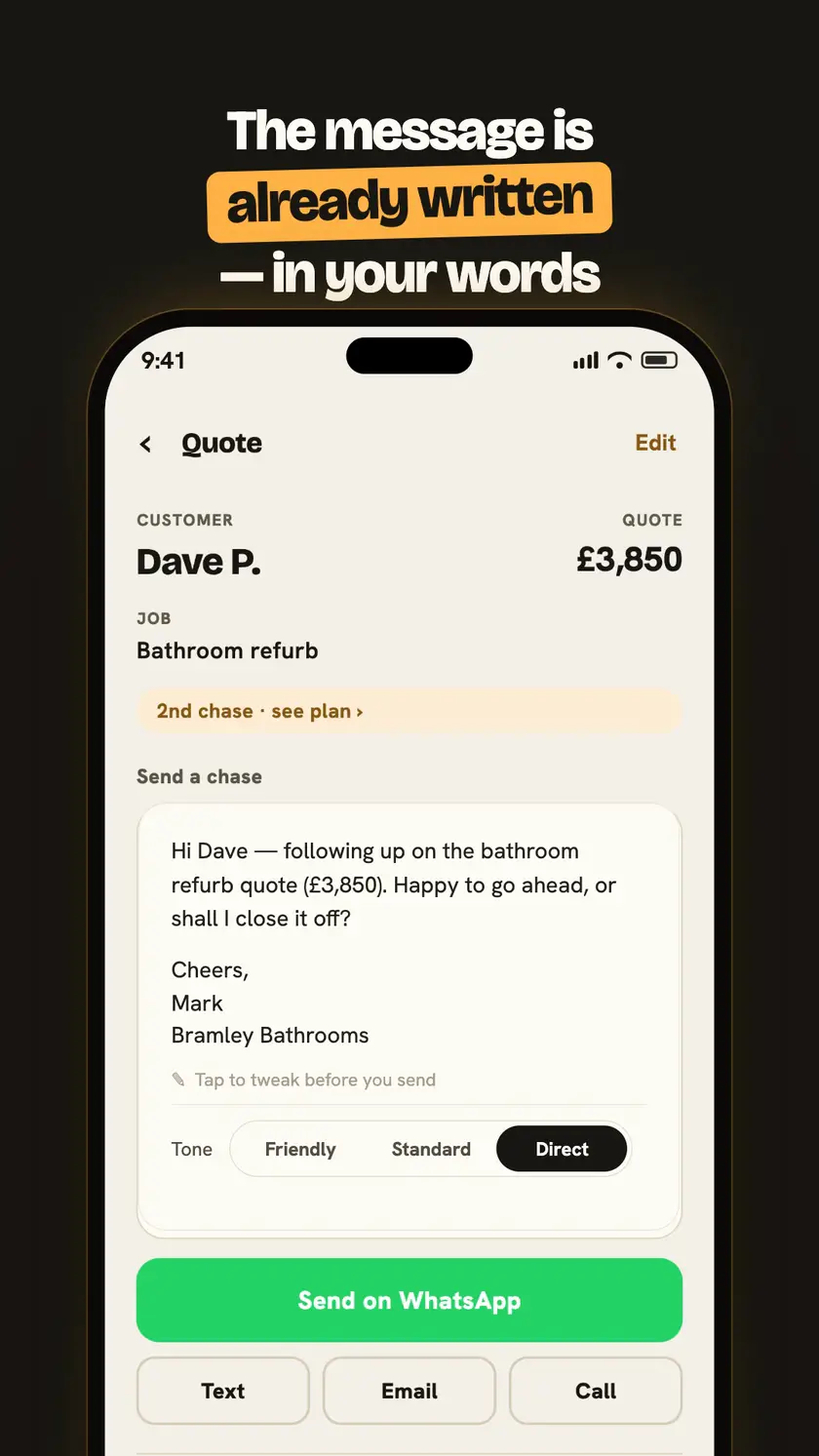
You don't need to write it fresh each time. We've put together free, copy-and-paste wording for every stage — WhatsApp, text, call and email — that you can tweak and send in seconds.
How many times to chase — and when to stop
Around three to five spaced-out chases is plenty. After a polite close-off, leave the door open and move your energy to warmer leads. Don't write it off forever, though: a single friendly check-in a few months later ("thought I'd see if the timing suits better now") quietly wins jobs that everyone else has forgotten about.
The bit that actually trips people up
It isn't writing the chase — it's remembering to, and keeping track of which quotes are still open. By the time the day's work is done, the admin's the last thing you fancy, and good jobs go cold. That's exactly the gap Chas'up fills: it tells you who to chase today, drafts the message in your words, and opens WhatsApp, text or email ready to go — you just read it and press send. Nothing ever goes out on its own.