Building quotes gone quiet? Follow up the jobs you've already priced
You did the site visit, priced the extension, sent it over… and silence. On bigger jobs the customer is usually weighing up two or three builders, and often waiting on plans or money as well. A well-timed follow-up keeps the conversation open — and Chas'up reminds you to send it.
The building quotes that go quiet
Big or small, any of them can go quiet:
- Extensions & single-storey builds
- Loft & garage conversions
- Knock-throughs & structural openings (RSJs)
- Brickwork, repointing & garden walls
- Patios, driveways & groundworks
- Renovations, refurbs & snagging extras
A building quote takes real time to put together and can run to tens of thousands of pounds. It deserves more than one email and a long silence.
Why building quotes go quiet
Price, timing and trust all matter on a big job, and the decision is rarely quick. A building quote that's gone quiet is often waiting on someone else entirely.
Drawings, planning and building regs
If the plans aren't approved yet, the customer can't say yes however good your price is. Ask where they are with planning or building control, and when they expect to hear. Then time your next message for after that date, not before.
Neighbours and party walls
In England and Wales, work on or near a shared boundary usually means telling the neighbours formally first, and that takes time. GOV.UK explains the party wall process. A customer stuck at this stage isn't ignoring you.
Money, and comparing quotes
Extensions and conversions often wait on a remortgage or savings, and customers struggle to compare builders' quotes line by line. Offer to walk through what's included, what's a provisional sum, and how the job could be phased. Decisions can take months, so a relaxed check-in later on is reasonable. When you mark a quote lost in Chas'up, you can switch on an optional “one last try” reminder for months later.
How to chase a building quote (without being pushy)
Send a friendly nudge around three days after the quote, then widen the gaps. Keep it helpful, not salesy — offer to talk it through or revisit the spec, and give them an easy out. Use whichever channel the customer already uses with you; for many that's WhatsApp or text. Here's a starting point — change it so every word is true for you:
Cheers,
[Your name] ([Business])
If they're waiting on planning or drawings:
Cheers,
[Your name] ([Business])
These are starting points, not scripts. Only mention dates, prices or availability if they're true for you, and read every message before you send it.
Grab more ready-to-send wording in our free quote follow-up templates, and the full method in how to chase a quote without being pushy. Still tracking quotes in your head or a notebook? See 7 ways to keep track of quotes — free tracker spreadsheet included.
That's the message sorted. Chas'up helps you remember who needs the next one. Save a sent quote, see who needs a follow-up, then review the message and send it yourself. See the app →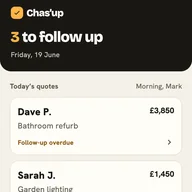
Let Chas'up do the remembering
The hard part isn't writing the chase — it's remembering to when you've got materials to order and subbies to line up. Chas'up keeps your open quotes in one place, shows you who's due a follow-up today (with the value you recorded), suggests a message you can edit, and opens WhatsApp, Messages or email ready to go. You read it and send it yourself — nothing goes out on its own, and the reminders stop when you mark a quote won or lost.
Quote follow-up for builders: common questions
How long after quoting a building job should I follow up?
Big builds need thinking time — leave a few days, then a friendly check around day 3, with follow-ups around day 8, day 16 and a polite close-off near day 30. Big decisions can take months, so a relaxed check-in later on is reasonable too.
What should I say when chasing a building quote?
Keep it helpful: 'Hi [Name], just checking the extension quote reached you — happy to talk through the spec or phasing.' Offer to clarify rather than push for a decision.
Can I chase building quotes by WhatsApp?
Yes. Use whichever channel the customer already uses with you — for many people that's WhatsApp or text. Chas'up opens WhatsApp, Messages, a call or email with the message ready for you to edit and send.
The customer is still waiting on planning permission — should I follow up?
Yes, but keep it light and ask about the timeline rather than the decision. Something like 'no rush if you're still waiting on planning — let me know when you hear' keeps the conversation open without pressure.
I'm on site all day — how do I keep on top of chasing quotes?
Chas'up tracks your open quotes, shows you who's due a follow-up today with the value you recorded, and suggests a message you can edit — you review it and send it yourself.